

Your help is
needed to identify
remains recovered from
With the exception of one
buried in the Tomb of The Unknowns, all unidentified remains which were
repatriated after the Korean War are buried at the Punchbowl, the National
Cemetery of the Pacific at Oahu, Hawaii. Prior to joint recovery
efforts,
The reference mitochondrial DNA (maternal DNA)
database is nearly complete but there are two additional types of DNA which
can be collected from family members to assist in identification.
These are nuclear DNA which can be obtained from both the male and
female relatives and Y-chromosome DNA which is obtained from the male side
of the family. It is so
important for families of missing servicemen to donate a family reference
sample (FRS) because when a substantial number have donated samples, the
likelihood of accurate identification is greatly enhanced. When you
request a DNA sample kit from your Casualty Officer, complete instructions
and packaging are provided to you. In addition, once sequencing is
complete, a copy of the report is returned to the individual.
Actions to be taken
-
Remind your Representatives that our government needs to stand by their
commitment to consider the POW/MIA issue the highest of national
priorities.
-
Contact your casualty officer at the toll free numbers below and request
a sample kit.
mtDNA Chart
|
Mother The mother is the logical starting point since she passed the mtDNA to the missing person. |
Brother The brother inherited the same mtDNA as the missing person but does not pass it on to his children. |
Sister The sister passes the mtDNA along to both her male and female children. |
|
Aunt, the Mother's Sister The aunt of the missing person has the same mtDNA as the mother of the missing person. |
Cousins on the Mother's Side Cousins may be male or female as long as their mother and the missing person's mother were sisters. |
Sister's Offspring Both male and female children of the missing person's sister have the mtDNA, but only the females will pass it on to their children. |
The mtDNA line will continue as long as there is a female family member arising from the mother's side to pass it along to the next generation. Your Casualty Officer will help you determine if you or another family member is a candidate to provide a mtDNA sample.
Y-Chromosome DNA Chart
|
Father The father of the missing person. |
Brother The brother inherited the same yDNA as the missing person. |
Son The brother passes the yDNA along to his sons. |
|
Uncle, the Father’s Brother The uncle of the missing person has the same yDNA as the father of the missing person. |
Cousins on the Father’s Side Male cousins, as long as their father and the missing person's father were brothers. |
Son's Offspring Male offsprings of the missing person's son have the yDNA, and will pass it on to their sons. |
The yDNA line will continue as long as there is a male family member arising from the father’s side to pass it along to the next generation. Your Casualty Officer will help you determine if you or another family member is a candidate to provide a yDNA sample.
Nuclear (Autosomal)
DNA is the third type of cells in the human body that is used in the
identification process
The Nuclear DNA molecule is found in nearly every cell in your body
and can be obtained from the smallest biological specimen.
The ability of the forensic scientist to type
nuclear DNA has given the forensic investigator the same power to identify a
person as a set of fingerprints or dental x-rays when compared to a missing
person.
Primary sources of DNA may be obtained from
oral swab, blood, fingernail, hair shaft (mtDNA
only), teeth, or tissue biopsy.
Alternative sources of DNA may be obtained from combs, wristwatches,
glasses, hearing aids, clothing, electric razors, toothbrushes, or
envelopes.
(1)
Contact Information
U.S.
HQ AFPC/DPFCM
Tel:
1 (800) 531-5501
Website:
https://www.afpc.af.mil/library/airforcepowmias.asp
U.S.
Department of the ArmyCasualty and Mortuary Affairs Operations Center
1600 Spearhead Div Ave, Dept 450
Fort Knox, KY 40122-5405
Tel:
1 (800) 892-2490
Website:
https://www.hrc.army.mil/TAGD/Past Conflict Repatriations Branch PCRB
Mission Statement
U.S.
Headquarters Manpower and Reserve Affairs (MRC)
Personal and Family Readiness Division
Tel:
1 (800) 847-1597
Website:
https://www.manpower.usmc.mil/portal/page/portal/M_RA_HOME/MF/C_PERSONNEL/Casualty
U.S.
Navy Personnel CommandCasualty Assistance Division (OPNAV N135C)
Tel:
1 (800) 443-9298
Website:
https://www.public.navy.mil/bupers-npc/support/casualty/Pages/NavyPOW-MIA.aspx
U.S.
Overseas Citizens Services4th Floor
Tel: Phone:
(202) 647-5470
Website: (none
provided)
Links for additional information
Korea Cold War Families of the Missing
Armed Forces DNA
Identification Laboratory (AFDIL)
Defense
POW/Missing Personnel Office (DPMO)
National
Archives & Records Administration
This page created in memory
of Lt. Charles and Enid Garrison
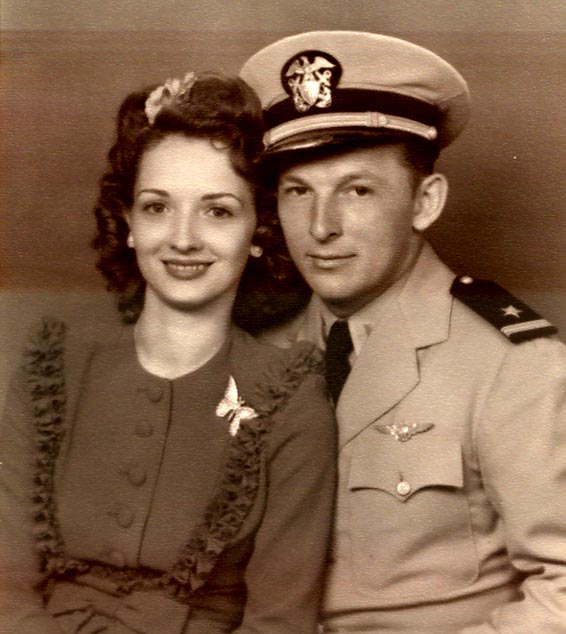
Dad's
Story "For God's Sake, Bail Out Now"
You are not
forgotten.
Please consider supporting
the Korean War
Project.
Your tax deductible contribution may be in memory of a loved one,
friend, or for all the "forgotten heroes."
Janis (Garrison) Curran
3555 E. Harvard Court
Gilbert, AZ 85234
Phones:
Landline 480-659-7217
Cell 480-868-7397
Korean War Project
https://www.koreanwar.org

